
Context
- Today, many experimental treatments are underway around the world. However, they involve only a very limited number of patients enrolled in clinical trials. Some countries or continents remain excluded from these trials for various reasons, including the difficulty of accessing an identified and structured patient community.
- Furthermore, the prevalence of Angelman Syndrome is still a broad estimate, ranging from 1 in 12,000 to 1 in 20,000 births. The distribution across different genotypes is also based on empirical data in the current scientific literature.
- While data registries do exist worldwide, they are sometimes local, or global but require families to re-enter their information. This can lead to frustration or even confusion: « Why do I have to enter this data again? »
The Challenge
Can we design an approach that meets a variety of needs while minimizing the effort required from families?
- Addressing different needs:
- For families: avoid the burden of re-entering the same information across multiple systems.
- For pharmaceutical companies: gain a better understanding of the Angelman community, refine prevalence estimates, and access reliable data on the distribution of patients by genotype.
- Providing value-added services:
- For families: strengthen the sense of belonging to both a local and global community.
- For local associations: gain better knowledge of their community to be more proactive in discussions with pharmaceutical companies and clinical project sponsors.
- For pharmaceutical companies: access aggregated, reliable, and structured information to better understand geographical specificities, along with connections to relevant local stakeholders.
Our Value Proposition
What is Business Intelligence (BI)?
Business Intelligence refers to the tools and methods used to collect, organize, and analyze data in a clear and actionable way.
It transforms raw data into understandable insights, often presented through interactive dashboards or visual reports.
How the Process Works?
- Every day, automated routines run on a server to extract the collected data.
- This data is then stored in a secure database.
- In case of a collection failure, the previous day’s data is automatically used to ensure continuity.
- The Business Intelligence reports are updated daily.
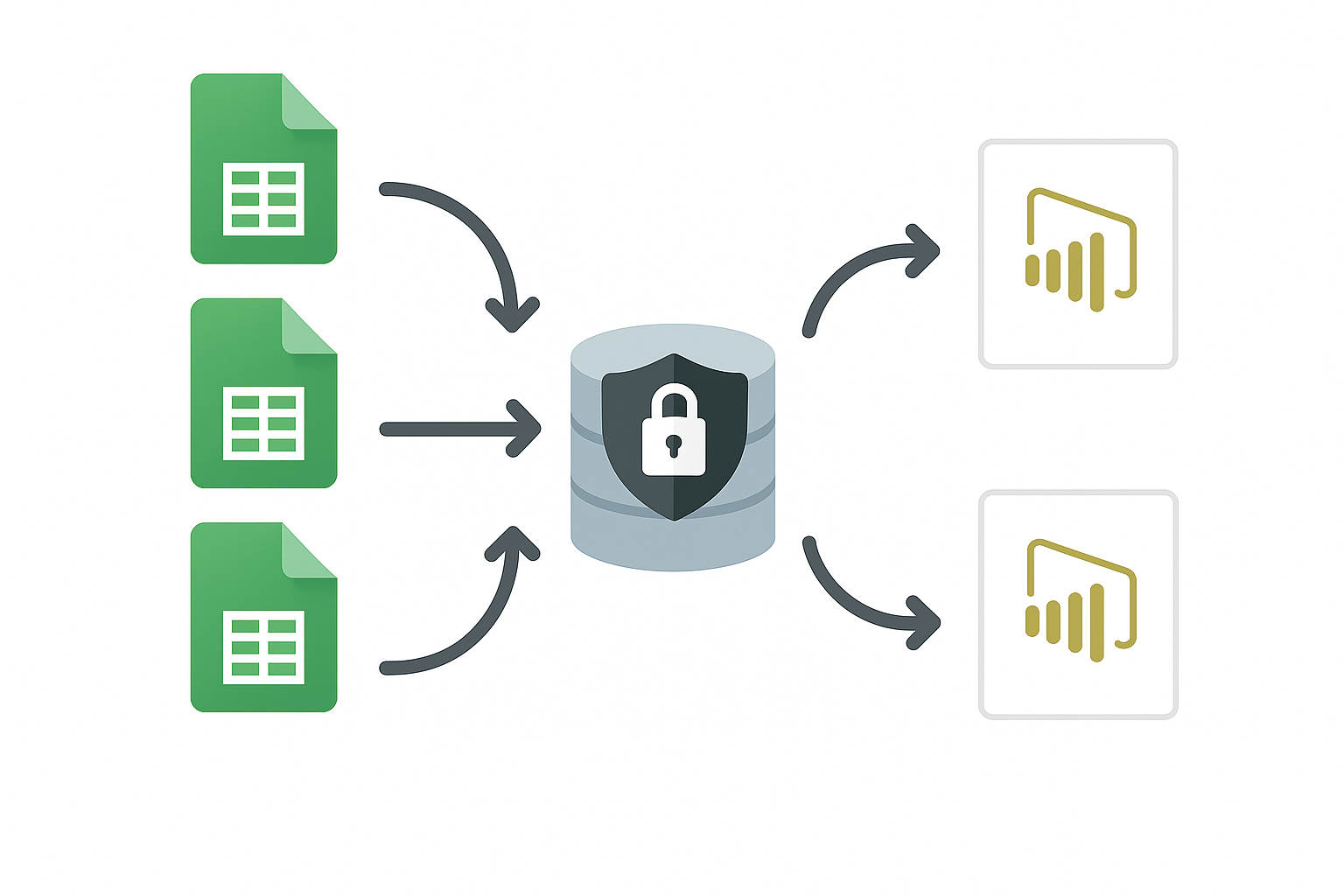
This technical solution is reliable, automated, and designed to be resilient to incidents. It is also monitored to quickly detect and correct any anomalies.
The generated reports can be easily integrated into a website, either in a public or private version, depending on your needs.